
Water
Commonly used for suitable Class A fire risks involving materials such as paper, wood and textiles.
FIRE EXTINGUISHERS
Fire extinguisher requirements and service scope confirmed for the site.
Fire extinguishers selected, installed and supported around the fire risks and requirements of your premises.
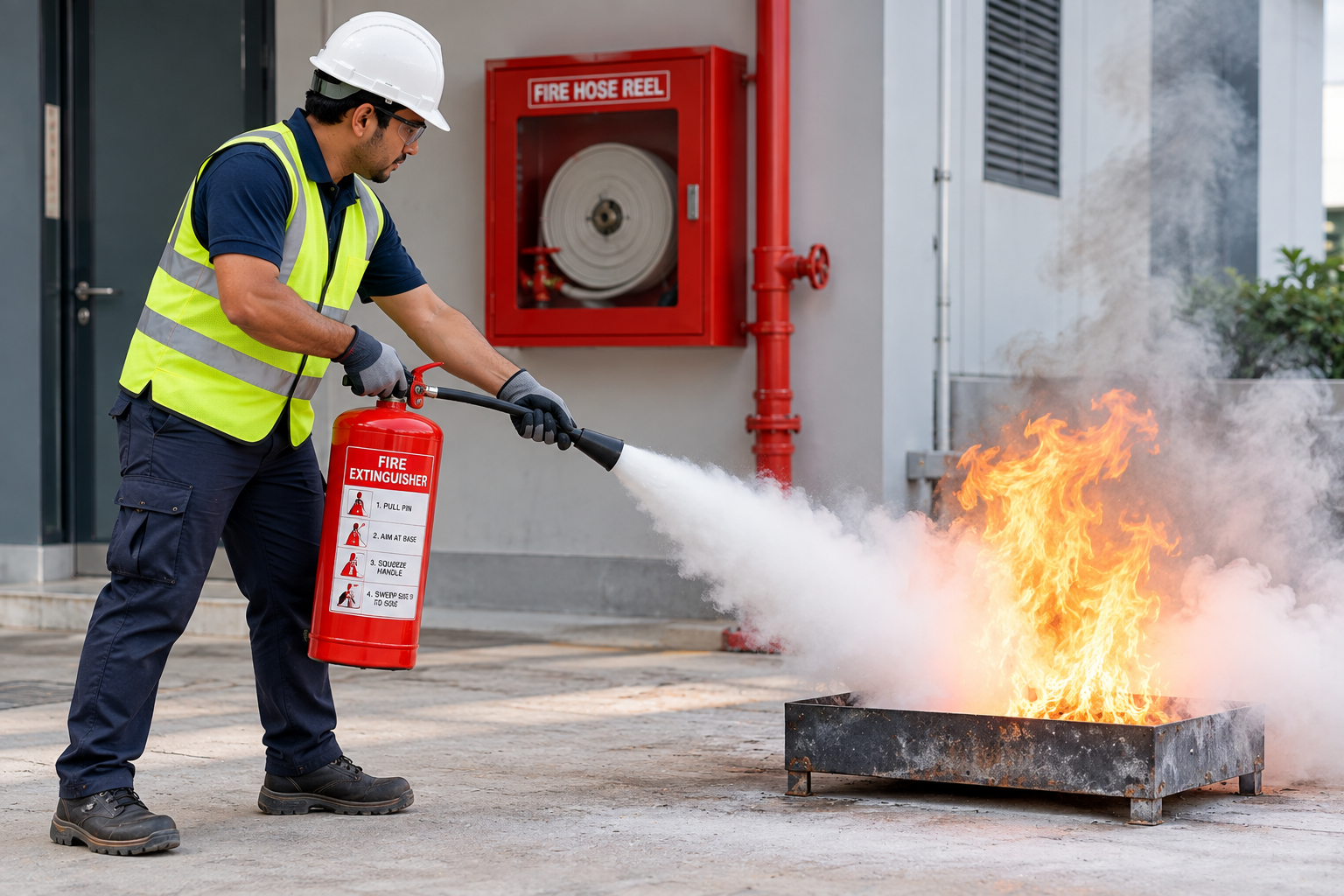
OUR FIRE EXTINGUISHER SERVICES
The right extinguisher arrangement depends on the fire risks, areas and activities within the premises. We support installation, inspection, servicing and maintenance requirements according to the site.
Fire extinguishers are intended to provide an immediate means of tackling a suitable small fire when it is safe and appropriate to do so.
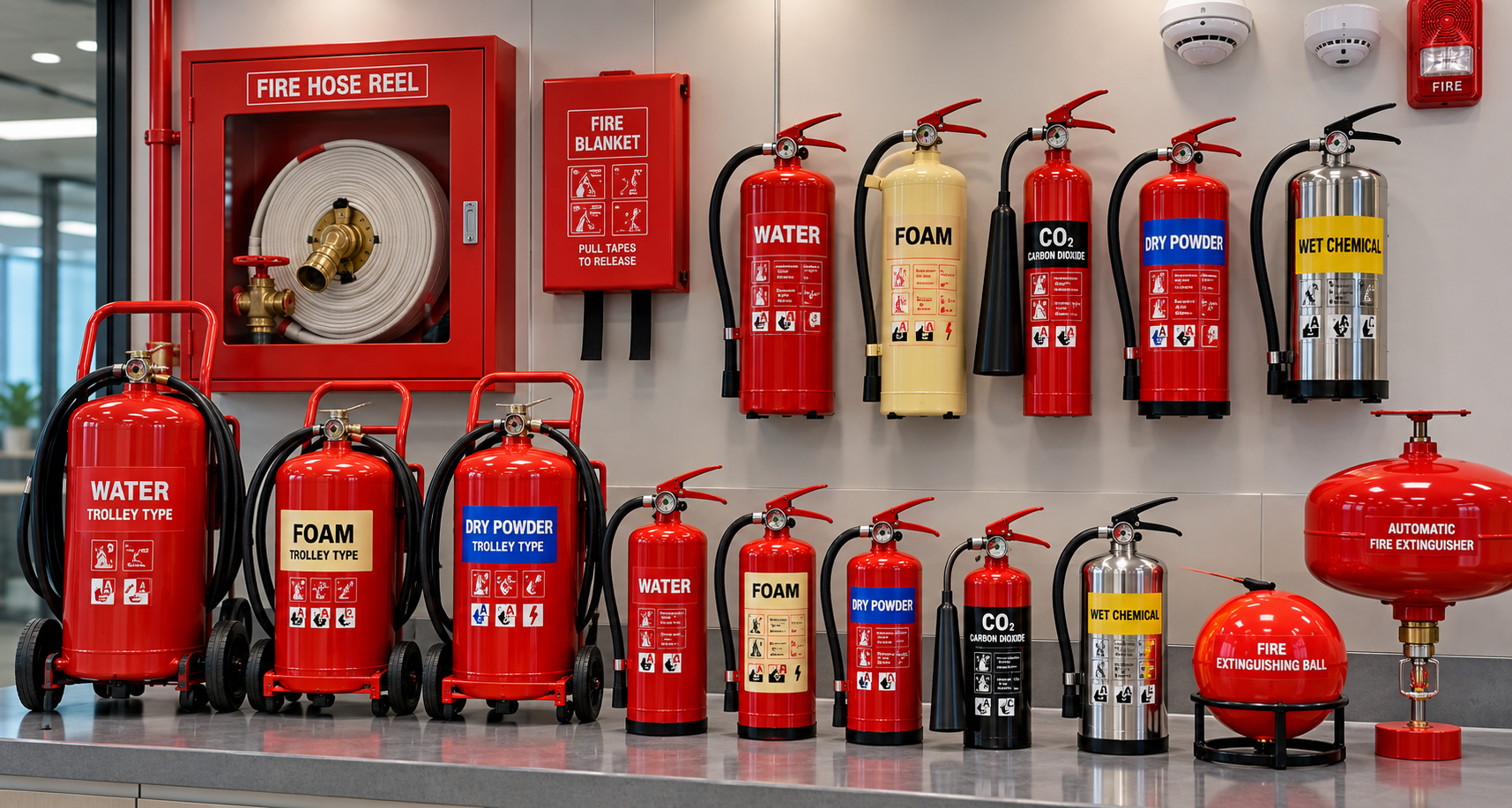
Different extinguishing agents are intended for different fire risks. Water, foam, CO₂, dry powder and wet chemical extinguishers are selected according to the application rather than using one type everywhere.
For a new requirement, the work starts by understanding the premises and the areas that need protection before the equipment and placement are discussed.
INSPECT • MAINTAIN • PROTECT
Regular checks and professional servicing help identify visible damage, corrosion, pressure issues, missing seals or other conditions that may affect an extinguisher.
Servicing requirements vary by extinguisher type and applicable requirements. We can assess existing equipment and discuss the appropriate service or replacement scope.
EXTINGUISHER TYPES
Different extinguishing agents are designed for different fire classifications and applications. The final selection should be based on the actual risk at the premises.
Commonly used for suitable Class A fire risks involving materials such as paper, wood and textiles.
Used for selected Class A and Class B applications, depending on the extinguisher specification and fire risk.
Commonly selected for certain electrical equipment and Class B fire risks where appropriate.
A versatile extinguisher type used for selected fire risks, with suitability depending on the application and environment.
Designed for particular cooking-oil and fat fire risks, especially in suitable kitchen applications.
INSTALLATION APPROACH
From understanding the premises to positioning and handover, the arrangement is planned around the actual site requirement.
We understand the premises, areas, fire risks and existing extinguisher arrangement.
Suitable extinguisher types, quantities, locations and supporting equipment are discussed around the requirement.
Extinguishers and associated equipment are installed or positioned at the agreed locations.
The installed arrangement is checked and the customer is informed about the equipment and service requirements.
WHERE IT IS USED
The number, type and placement of extinguishers should reflect the fire risks and layout of each premises.
LASTING SUPPORT
Shreem Solutions can support inspection and servicing requirements for existing fire extinguishers and discuss replacement where equipment is no longer suitable or serviceable.
Service scope depends on the extinguisher type, condition, site requirement and applicable servicing requirements.
QUESTIONS
Common types include water, foam, carbon dioxide (CO₂), dry powder and wet chemical extinguishers. The correct type depends on the fire risk and application.
Selection should be based on the fire risks present at the premises, the area being protected and the extinguisher specification. We can discuss the requirement during a site visit.
Yes. Fire extinguishers should be inspected and serviced at appropriate intervals so that damage, pressure, seals and other service conditions can be checked. The schedule should follow the equipment requirements, manufacturer guidance and applicable local requirements.
Yes. Existing extinguishers can be assessed for serviceability and the required service or replacement scope can be discussed based on their type and condition.
Yes. We can discuss a new requirement, identify the areas to be covered and plan the extinguisher arrangement around the premises.
OTHER SOLUTIONS
The team will contact you about the requirement.